 RAZMAKE
Designing BRIDGE: an AI translation device people actually use
The design story behind BRIDGE, RAZMAKE's AI-powered two-way translation device, why it's a shared countertop tool with push-to-talk controls and a shared screen.
Plenty of software can translate language. The harder question we kept coming back to was: what should sit between two strangers, on a counter, that makes translation feel effortless for both of them? BRIDGE is our answer.
Start from the conversation, not the technology
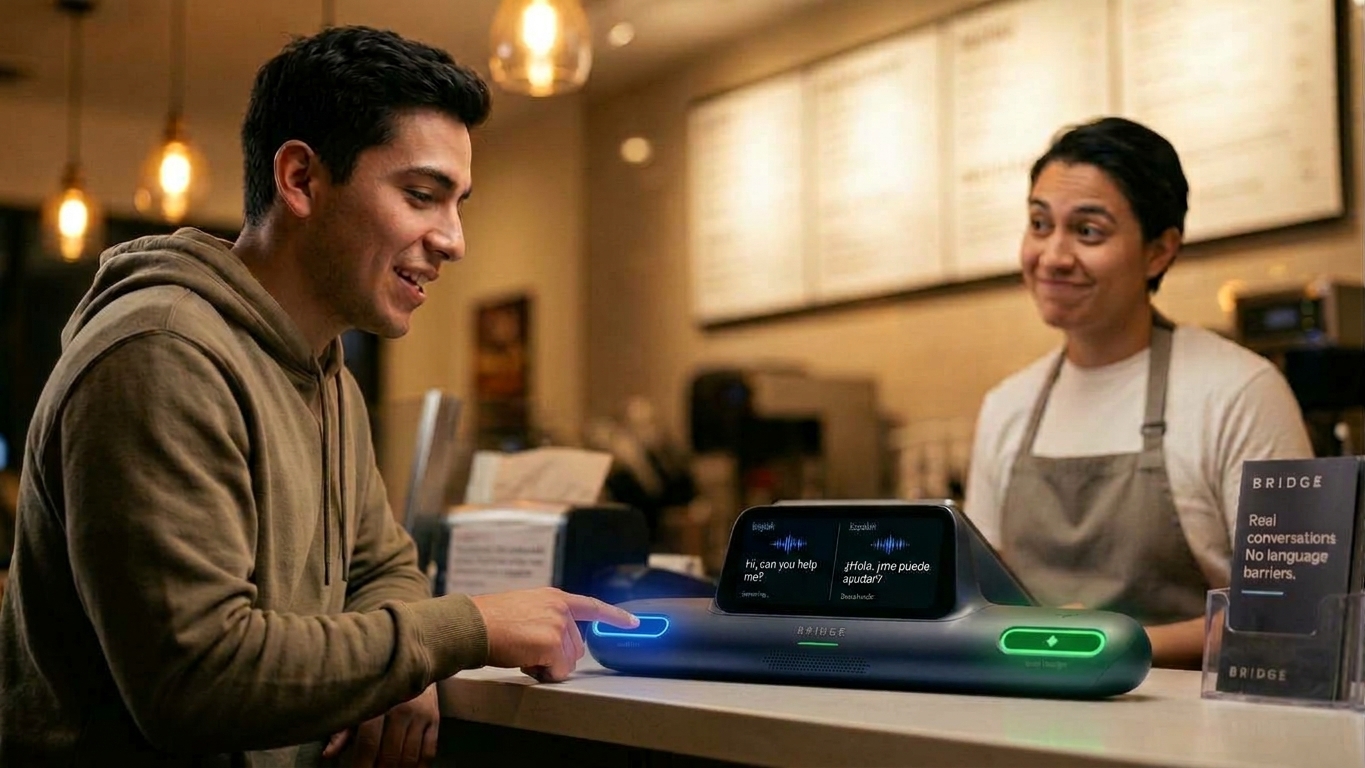
We didn't start with a chip or a model. We started with a scene: a staff member and a customer who want to talk and can't. Everything about BRIDGE comes from that scene, it's shaped to sit between two people, show both of them what's happening, and let either one take a turn without instructions.
A button for each person
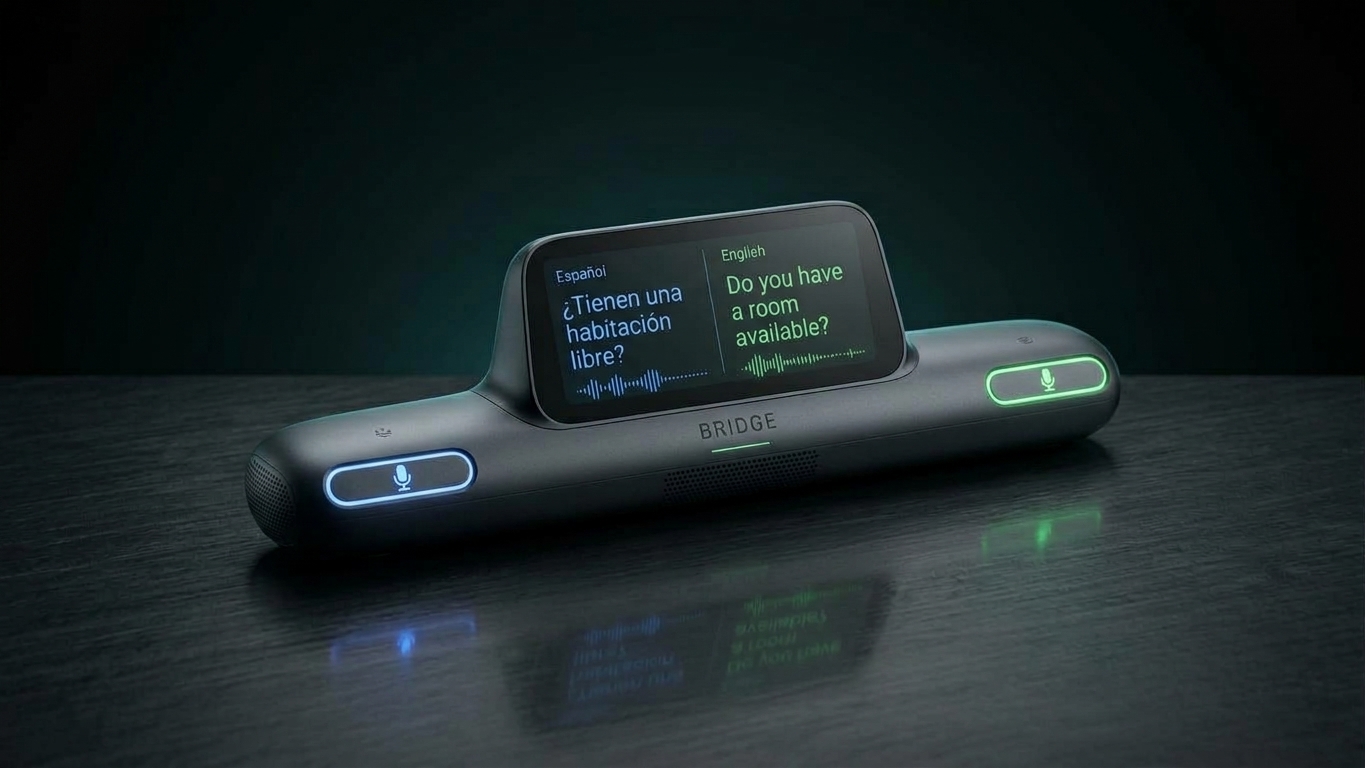
The two push-to-talk controls (blue for the staff member, green for the customer) do more than start recording. They make the device legible. Anyone who walks up understands, in a second, that this side is mine and that side is yours. No onboarding, no app, no account.
Say it and show it
BRIDGE speaks the translation out loud and puts it on a shared screen at the same time. Audio keeps the conversation human; the screen removes doubt. If a word is critical (a name, a number, a medication), both people can see it, not just hope they heard it right.
- Two microphones and a clear speaker tuned for noisy, real-world rooms.
- A shared display with live captions on both sides.
- The AI runs in the cloud, the device stays simple: it listens, shows, and speaks.
Intelligence that disappears
The best compliment a tool like this can get is that people stop noticing it. When BRIDGE works, the technology fades and two people are just… talking. That's the bar we hold every RAZMAKE product to, practical intelligence that gets out of the way.
When BRIDGE works, the technology fades and two people are just talking.